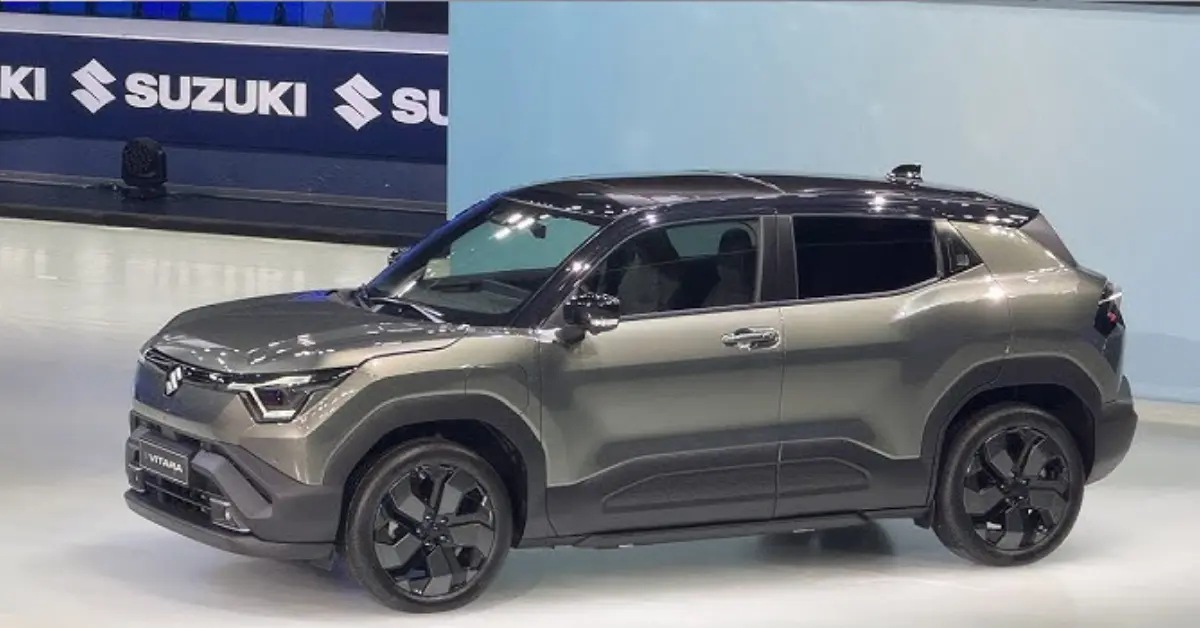
The introduction of Maruti Suzuki as the first full-electric SUV, Maruti eVitara, as a Battery-as-a-Service (BaaS) product has provided the electric car market in India with a strong new impetus. The plan will also address two of the largest obstacles to EV adoption in India: high initial cost and poor charging infrastructure in addition to the impending January 2026 rollout. The battery-subscribe model, plus the support of nation-wide charging and servicing, is a bold step that Maruti Suzuki is taking to prove that EVs can be a practical and yet affordable Indian family car.
But what does the BaaS strategy suggest to buyers, why is it important now and why can it determine the future of EV ownership in India?
What is BaaS (Battery-as-a-Service)?
Conventional EV acquisition models include the battery in their cars – that contributes greatly to the purchase price. In BaaS, the buyer acquires the car or gets it on lease without the battery. Rather, the battery is rented or subscribed to, and usage of the battery, maintenance, and warranty (sometimes) are covered by fees at the end of each month. It will translate to a significantly reduced initial price, which will enable EVs to be affordable to more people.
To the consumers of eVitara, this implies that they will have access to a fully electric SUV, yet skip the expensive battery price. It is a strategy that is basically the same treatment that we give the battery just like we do with petrol or diesel: pay as you go. Sector stakeholders think BaaS will soon unlock EV mass adoption in cost-sensitive economies such as India.
eVitara + BaaS: What You Get
Maruti Suzuki has put a strong package on the offering of the eVitara BaaS, which comprises not of a vehicle that has been de-EVed but of a complete EV.
Key Highlights
Battery Choices: eVitara will have two battery packs, 49 kWh (with entry trims), and 61 kWh (with higher trims).
Impressive Range: the bigger pack (61 kWh) is rated to have a single-charge range up to 543 km, which is a very good figure, and eliminates range anxiety.
High Safety: eVitara has gained a 5 star rating during Bharat NCAP crash tests – with safety measures including 7 airbags, high strength construction, ESC, TPMS, 360deg camera, and ADAS (Level 2) assistance.
Comfort & Features: Luxury materials such as big touchscreen infotainment system, electronic instrument cluster, high connectivity levels, ample interior space, and additional options such as sunroof, ventilated seats, etc.
All this renders eVitara with BaaS not only a cheap EV, but a feature-packed electric SUV that any family can use on a daily basis.
Creating the EV Ecosystem: Service + Support + Charging.
Being an EV owner does not entail the actual purchase of the vehicle, but the convenience with which the vehicle can be charged, serviced, rehabilitated, and assisted. Maruti Suzuki realizes this. This is why the BaaS strategy is associated with a colossal push in infrastructure.
Ahead of the launch of the evitara, the company will invest [?]250 crore in creating a countrywide EV ecosystem.
More than 1,100 cities have already more than 2000 exclusive charging points installed.
In the long run, Maruti seeks 1 lakh charging points by 2030 to ensure a charger within every 5-10 km in major corridors – to curb range anxiety.
The company has also trained 1,500 EV ready workshops and prepared a work force to maintain and service EVs in the country under the after sales support.
This infrastructural push has provided potential eVitara buyers, and in particular, those individuals who have never owned an EV with the assurance that being an EV owner will not be a pain.
The reason why this strategy is important, in particular to India.
India is a varied market: variable infrastructure, different level of income, and a significant number of first-time car buyers. BaaS + robust infrastructure assists in getting over many obstacles that cover the EV adoption.
Reduced initial price: EV is affordable to the consumer who felt that EV was unaffordable before.
Decreased risk perception: When battery is not owned, but rented, there will be fewer concerns in regard to battery degrading.
Increased long-term value: Since all the maintenance, battery life, and potential buyback guarantees are under the umbrella of the manufacturer, it will be easier to become a owner.
Practical on Indian roads: Range of up to 543 km, and growing network of fast-chargers: It becomes possible both to make daily commutes to the city and occasional long trips.
In brief – the BaaS approach of Maruti would allow EVs to be mainstream in India, as opposed to niche or high-end.
What to Expect and What to Keep a Lookout.
Since the release of the eVitara is expected in early 2026 (the booking will be announced in the nearest future), consumers will have a couple of details they will want to be clarified:
Official prices (ex-showroom + monthly subscription to BaaS) — the final factor that should determine whether this EV will be affordable or not.
Real-justice expenses: Monthly battery fee, charging fee (domestic versus out-of-home), repairs and long-term battery life.
Ratio price to features: What features are standard or optional and on what trims which battery? – very important to the consumer.
Resale / Buyback plans (as BaaS can have guaranteed buyback ) – this might be a significant benefit to buyers who would like flexibility.
It is understandable that Maruti is aiming to ease the process of owning an EV, not only by offering a car to a customer, but a complete electric mobility experience.
Conclusion
The BaaS announcement of evitara is a well-done step of democratizing the ownership of EVs in India by Maruti Suzuki. Maruti is tackling the two largest barriers to the adoption of EVs: cost and convenience by reducing the initial cost through battery subscription and at the same time developing charging and service stations.
When implemented properly, this strategy would help rebrand the perception of Indian families towards electric cars, as EVs would not be perceived as something futuristic, but something that would be part of their daily routine. To individuals that have doubts about the reliability or affordability of EVs, the evitara + BaaS combo can become a new entry point.